Sunday, April 16, 2006


...a snake... Posted by Picasa

...this Hoopoe bird that we almost ran over... Posted by Picasa

...a Gaur... Posted by Picasa

...this Mynas bird... Posted by Picasa

...a monkey... Posted by Picasa

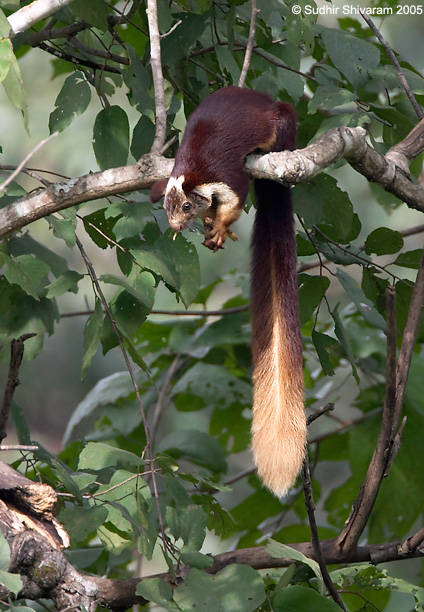
...and this Indian Giant Squirrel (here is a picture where you can actually make out the beast)... Due to their uniquely balanced bodies, they spend most of the day as on this picture, just lying across a branch...Posted by Picasa

The ants of India seem to be very preoccupied with architecture. Aside from the enormous termite castles (sorry, they were so abundant that it never occured to me to take a picture :( ), I also saw some fascinating tree-nests. Posted by Picasa

Here a are a couple of Green Tree Ant nests. Posted by Picasa

Mysore is a large town close to Bangalore. It is famous for its botanical garden, and for the Mysore Palace depicted above. The Palace had a rather turbulent past, it got completely destroyed several times over the last 600 years or so. This latest incarnation isn't even a hundred years old, and is the creation of a British architect. The main attaction is seeing how the building blends Indian, Asian and European motifs... There are some gorgeous ivory-inlay doors inside, but I couldn't document them here because the guards were quite extreme about cameras. Posted by Picasa

This is the side entrance to the Palace. Posted by Picasa

And this is the main gate.Posted by Picasa

On the way back from Mysore, I stopped by the Ranganathittu bird sanctuary. The biggest attraction of the park is a boat ride that takes you close to the islands where birds are hanging off the bushes almost like they were decoration on a christmas tree. Getting into the boat involved more than a little bit of hand-to-hand combat, at which I was a great disadvantage, because I didn't want to end up in the water with my camera in hand. Finally I prevailed, which gave me a chance to take the pictures below.

They don't really do the place justice. There was such a diverse population of birds that as I was leafing through my pictures, I discovered species in the backround that I didn't even notice when I was there. Posted by Picasa

A few Little Egrets would turn up occasionally. Posted by Picasa

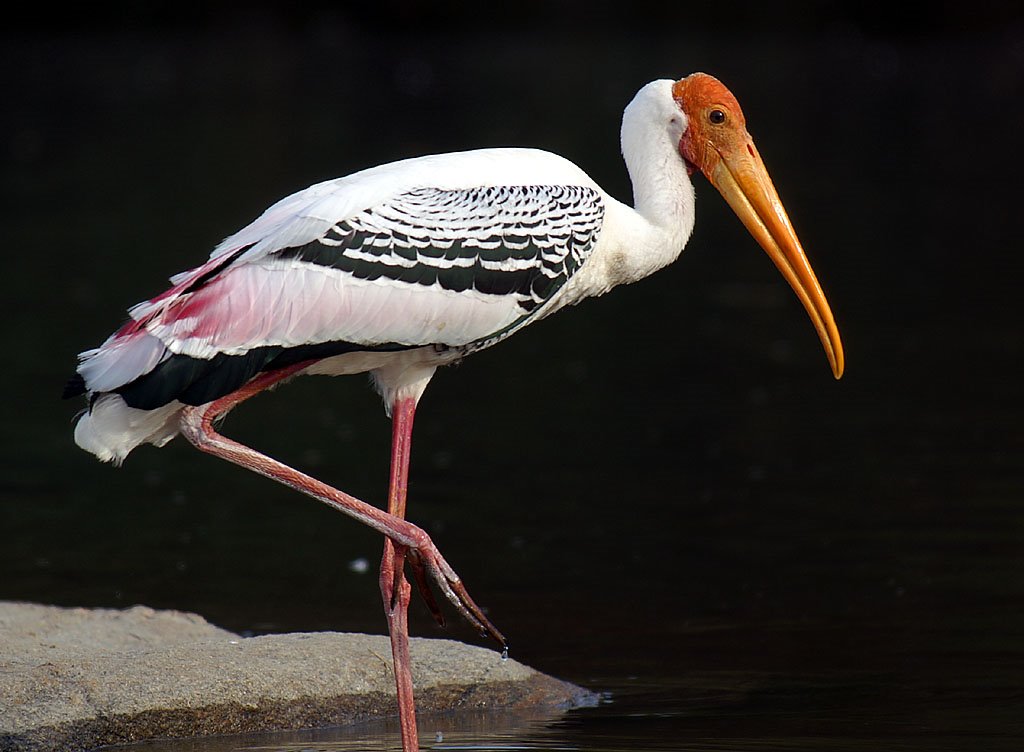
For me the most memorable bird of the sanctuary was the Painted Stork. They were abundant and very funny(or at least accident-prone) looking. Posted by Picasa

I was originally going for the landing stork, but got this small group of Cattle Egrets as a bonus. Posted by Picasa

The boat ride goes around a little rock-island, that seems to be permanently inhabited by this crocodile. He (she?) appeared very peaceful, even though some of the birds (not to mention humans) ventured quite close. Posted by Picasa

I enjoyed this little staredown between the birds and their human visitors...Posted by Picasa

Here is a portrait of an Asian Open-billed Stork. Beside the Painted Stork, they inhabited the area in the largest numbers. Posted by Picasa

I looked long and hard for one that would be carrying a baby, but this was the best I could do... Posted by Picasa

I also spotted some White Spoonbills. Posted by Picasa

Here is one last picture of the storks, as they quarrel over some very important stork-business.Posted by Picasa

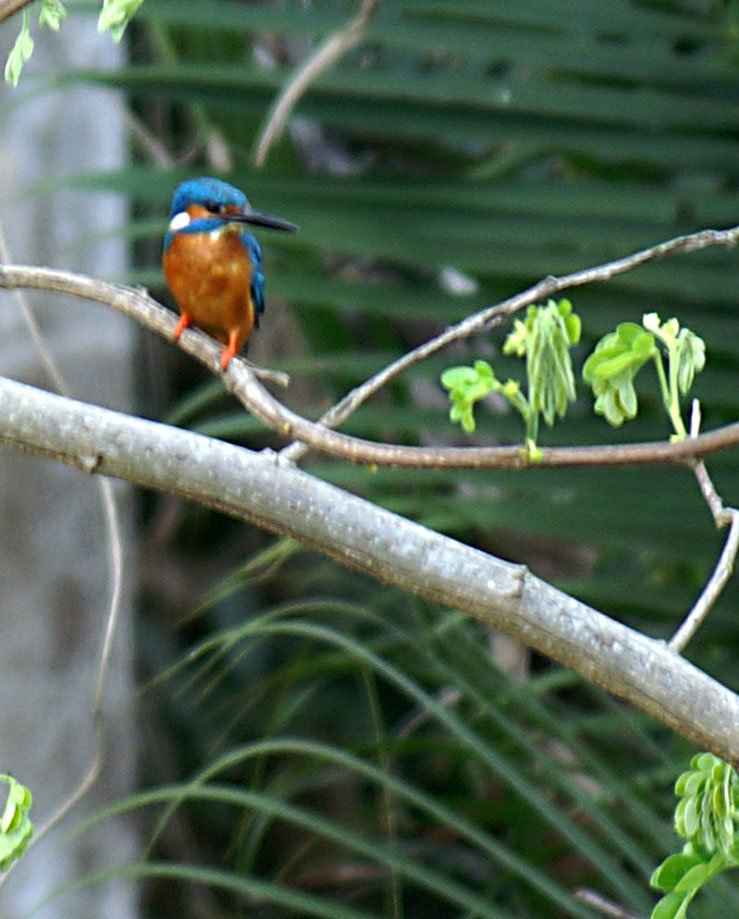
One of India's richest men, Vijay Mallya (or just dr. Vijay, as he likes to be called) presides over a multi-national conglomerate called the UB group. One of his stongest brands is Kingfisher, which supplies a large percentage of India's beer and liquor products. He has recently started his own airline, also called Kingfisher. (He probably figured that he had already beaten Virgin owner Richard Branson at partying and being filthy rich, and having an airline was the last necessary step.) I frequented his brand new Airbus jet with my business when I went to Delhi (more on that later). This is a rather lousy picture of the kingfisher bird that all those products are named after. Posted by Picasa

GE's offices occupy a huge plot just south of the main IT center of Bangalore. GE was one of the first companies to start outsourcing to Bangalore, and as such they managed to get some prime real estate. They also got some hassles with the local infrastructure, so they ended up building their own powerplant and sewage recycling unit, obtaining complete independence from the city's utilities.

I managed to steal a few shots of the garden of the GE Healthcare center.

You can just barely see the cafeteria on the right. Beside the overhead tent, the place is completely open and subject to weather conditions. But since these weather conditions are limited to occasional rain, people don't seem to mind.

The cafeteria serves breakfast, lunch and dinner, for symbolic amounts of money (10-50 cents a meal). However, breakfast closes at 10 am and dinner doesn't start until 8 pm, so it's not obvious how anyone working 8 hours could take full advantage of the three meals.

The main (cheap) lineup consists entirely of vegetarian courses. The non-veg stuff is restricted to a couple of desks on the side, and costs more (even up to 75 cents). I've experimented a bit with the veg cuisine and finally came to understand why all visitors from India complain about the abysmal selection of vegetarian foods in the US and Europe. Indians prepare an amazing variety of vegetarian meals, and most of them doesn't even try to be all that healthy (deep frying is very much OK as far as they're concerned). They also make yummy flatbreads out of anything that is sticky enough to be made into bread (such as lentils, rice, all sorts of flour, etc.). Posted by Picasa

There is a little lake in a corner, with a little herbal garden on the shore. You can always see a bunch of people sitting around the lake and enjoying the momentary escape from work. Posted by Picasa

The garden, as well as Bangalore in general, is full of colorful flowers... Posted by Picasa